
Finding Prosper Residents Through Records
A useful Prosper residents directory search is a sequence, not a single master list. First establish the parcel’s county because Prosper reaches into Collin and Denton counties. An appraisal record works best when you know a street address. A recorded deed works best when you need the owner’s role or an older transfer. A voter record is a registration check, and the library, archives, newspapers, and cemetery contacts are the paths for an older household. Each source has a date and purpose, so compare them rather than treating one result as proof of every person at an address.
Start with the most specific detail available. An address can produce a parcel ID and legal description. A full name may be narrowed with a county, date, or related property. An old family name may need the historical place terms Rock Hill, Richland, Walnut Grove, or Rhea’s Mill as well as Prosper. Owner names, registered-voter information, court parties, and directory listings answer different questions. None is a complete list of household members or a guarantee of a current residence.
- Confirm the parcel county with the appraisal map and record its situs address and legal description.
- Search the appropriate property record by address or owner name.
- Use the county clerk index to check recorded parties and property transfers.
- Use the voter route only for a lawful, date-specific registration check.
- For historical household work, compare the UNT collection, library assistance, archival directories, census material, and a focused public-record request.
Prosper Residents Record Offices
Prosper is unusual because the town’s records do not sit behind one county counter. Use Collin County systems for a Collin-side parcel and Denton County systems for a Denton-side parcel. The Town keeps municipal files, including public-information requests and permit records. The county clerk keeps land instruments, while the appraisal districts hold parcel cards. Collin Elections controls its voter lookup and voter-file routes. The Prosper street directory has the address-by-address chain when the goal is a whole street rather than one record.
Collin County Clerk
Land Recordings
McKinney, TX
Official records index
Appraisal Districts
Collin and Denton sides
County-specific property records
Address and owner routes
Collin County Elections
Voter registration records
County-specific lookup
972-547-1900
Prosper’s Two-County Records Map
Before using a Prosper residents directory, establish whether the parcel is in Collin County or Denton County. The incorporated town crosses both counties. A Prosper mailing line, ZIP code, school district, or utility district does not settle the question. The Town GIS resources and the county appraisal systems are the right starting points for the parcel geography. Once the county and legal description are known, route deeds, court matters, voter administration, and local vital requests to the custodian that serves that side.
The split also explains why a search can fail even when the address is accurate. Collin’s deed or voter system does not replace Denton’s system for a Denton-side parcel. Older sources may use Rock Hill, Richland, Walnut Grove, Rhea’s Mill, a rural route, or a nearby community rather than the modern town label. Keep the source’s own place wording in a research note, then compare it with the parcel, map, and date.
Note: A ZIP is delivery geography, while a legal description and parcel ID identify the record trail that belongs to a specific county.
Prosper Parcel Searches Before Names
Collin CAD’s current property search offers owner and advanced search routes for the Collin side of Prosper. Its visible fields include owner name, street number, street name, property ID, property type, tax year, subdivision, neighborhood, and legal description. The street-name instruction says to omit prefixes, suffixes, and unit numbers. The matching Denton-side route is the Denton Central Appraisal District, whose published schema includes owner, situs, mailing, legal-description, block, lot, and ZIP data.
Use a parcel result as an organized starting point. It can distinguish the situs address, where the property sits, from the owner’s mailing address, where appraisal mail goes. It can also supply the lot, block, subdivision, or tract language needed for an old deed. It is not a resident roster, and a homestead flag is only an appraisal indicator rather than conclusive evidence that a particular person occupies the property.
The Collin CAD property-search screen shows the kind of owner and advanced fields available for a Prosper parcel search.
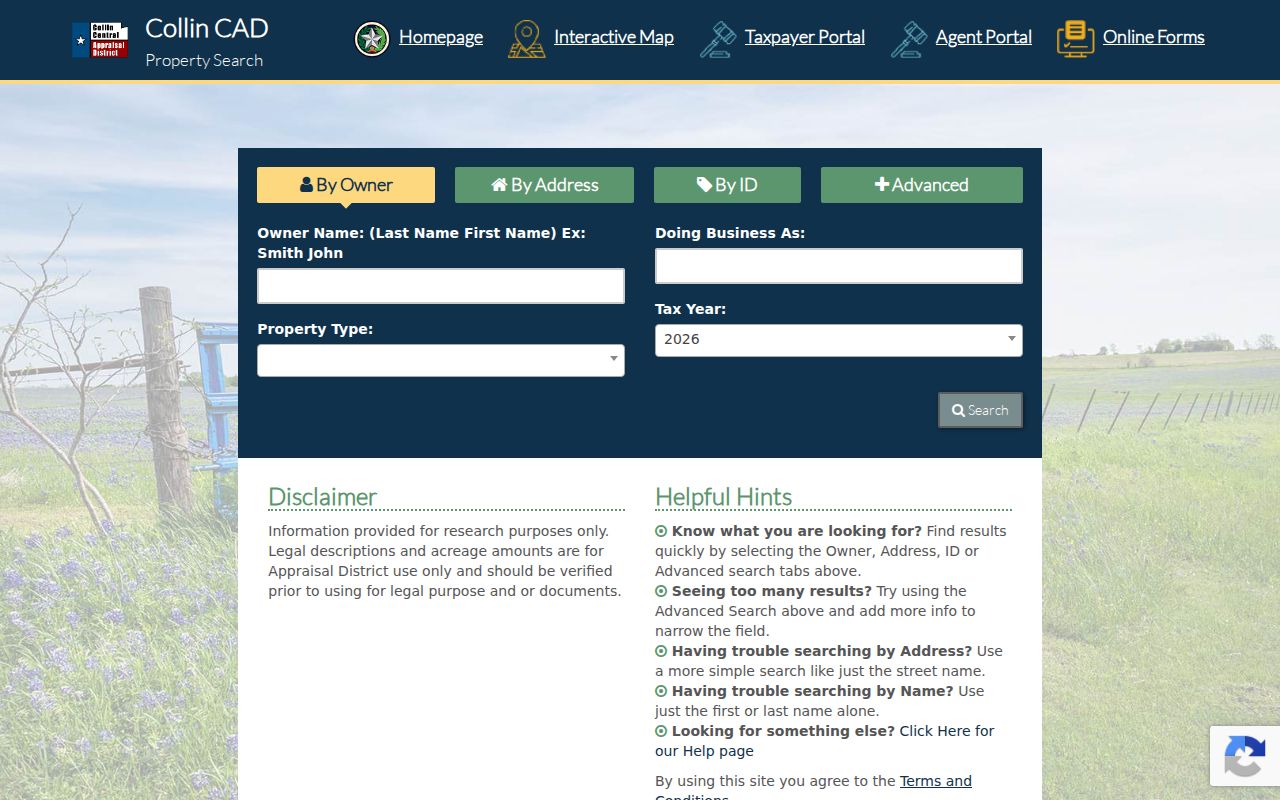
Record the parcel ID and legal description from the result before moving to the county clerk’s records.
| Collin CAD field | Format | Use in a Prosper search |
|---|---|---|
| Owner Name | Text, Last First | Find a potential owner record |
| Street Number and Street Name | Text | Locate a physical parcel |
| Property or Geographic ID | Number or alphanumeric | Preserve a stable research identifier |
| Subdivision or Legal Description | Searchable text | Bridge appraisal and deed records |
| Tax Year and Property Type | Selector | Limit the appraisal view |
Prosper Deed Parties and Parcel History
The Collin Official Records Search is the Collin-side route for deeds, plats, liens, assumed names, and related recordings. Quick Search accepts names, subdivision terms, document types, or document numbers. Advanced Search adds party names, grantor, grantee, recorded and instrument-date ranges, book, volume, page, lot, block, legal description, and full-document text. The clerk’s instructions say to compare the legal description with CCAD and to use the document number to retrieve a copy through the proper process.
A grantor transfers an interest. A grantee receives it. Search the current owner as a grantee, compare the legal description on the likely deed, then search the earlier grantor as a grantee to step back through a chain. Collin’s Historical Records mode reaches 1843 through 1975. That is a separate historical mode, not proof that the ordinary current index supplies an unbroken run beginning in 1843. Denton-side instruments belong with the Denton County Clerk.
The free index helps date a recorded connection, while an image or certified copy follows the clerk’s separate access and payment rules.
- Parcel
- A defined unit of land in the appraisal and map systems.
- Situs address
- The physical address of the parcel, distinct from an owner’s mailing address.
- Legal description
- The lot, block, subdivision, tract, or abstract wording that identifies land in a recorded instrument.
- Index
- A search aid that points to a record; it is not always the complete certified record.
Prosper Voter Records With Limits
Collin Voter Registration Search exposes First Name, Last Name, and Date of Birth fields. It is county-specific, so a Prosper address on the Denton side belongs with the Denton County voter registrar. The research inspection could not render a live result, so do not assume a result layout or update time that the interface does not publish. Texas does not register voters by party, and a voter record does not reveal ballot choices.
Collin’s paid voter-file route may include approved residence and mailing fields, status, districts, and election history, but the county excludes phone and email and sets use restrictions. Protected voters and Address Confidentiality Program participants have additional safeguards. Treat a voter result as a dated registration record, not as a full household list. Narrow any request to the lawful question and preserve the order date because status can change.
The Collin voter lookup form displays the three fields used for the county-specific route.
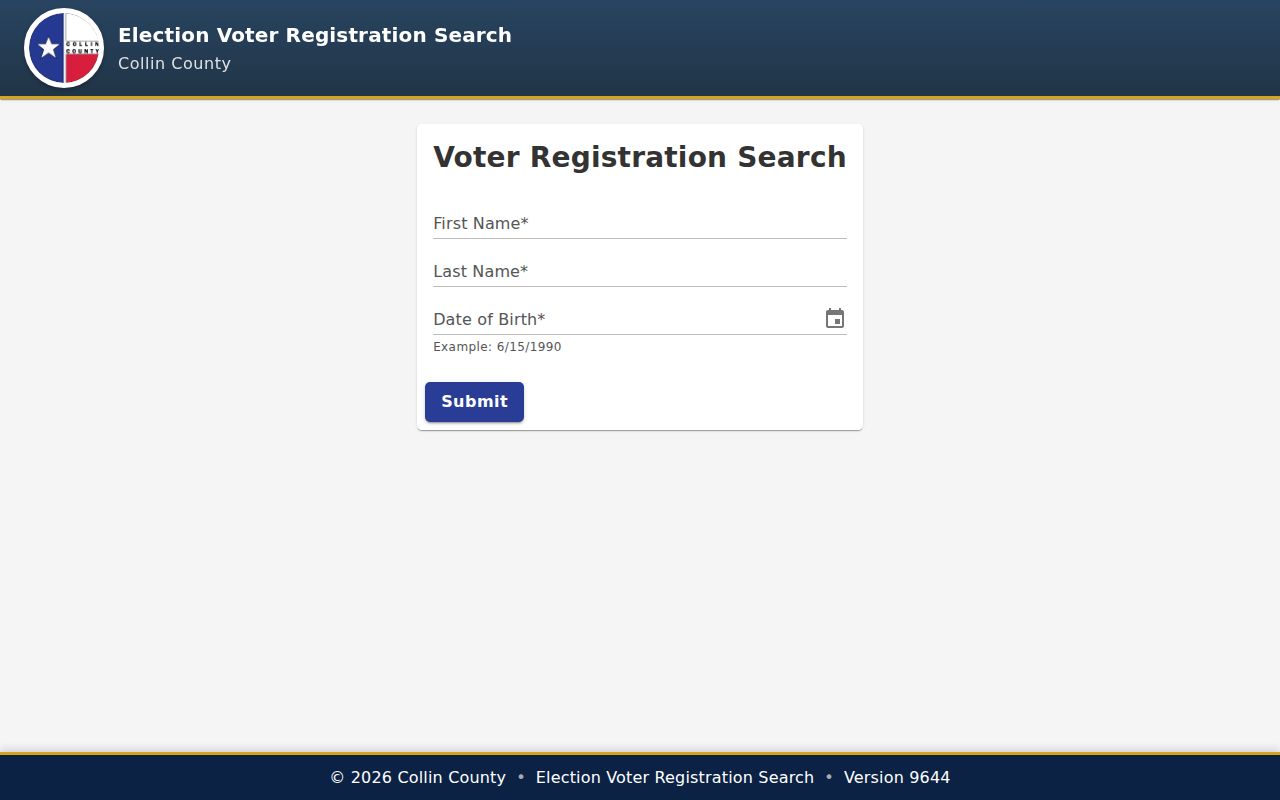
The form is useful for a focused registration check, not for browsing every person on a Prosper street.
Current Prosper Resident Directories
Current Prosper resident directories are partial lists built for separate public purposes. An appraisal card can identify an owner and the parcel’s situs and mailing fields. The clerk index identifies recorded parties. A voter record is limited to eligible registered voters and subject to confidentiality rules. Court, licensing, and business indexes may confirm a specific public connection, but they do not create a household roster. Keep the custodian and record date with every result.
| Source | Who It Lists | Keeper | Access |
|---|---|---|---|
| CCAD or Denton CAD | Recorded owners and parcel fields | Appraisal district | Free public search |
| Collin voter lookup | Eligible registered voter status | Collin Elections | Name and birth-date route |
| County deed index | Grantors, grantees, and filings | County Clerk | Free index; copy rules apply |
| Town staff directory | Current Town contacts | Town of Prosper | Public contact directory |
| HOA contact resources | Association and board-facing contacts | Town and state search | Not a member list |
Use the property and clerk records for a land connection, then move to the Prosper resident lookup when a single person needs careful confirmation across independent sources. A mailing address is not the physical parcel address, and an owner is not automatically every occupant. Those differences matter in a growing two-county town.
Prosper Court Names Need Context
For a named court record, use the Collin County case-information route or the appropriate Denton County court path after confirming the county. Collin reports general online ranges of 1984 forward for Justice of the Peace, civil, and probate cases, 1988 forward for district criminal cases, and 2000 forward for county-at-law criminal cases. Earlier material may require a clerk request or manual search. Prosper Municipal Court’s local docket can be browsed by last name or date, but its public name-search feature was unavailable at the research inspection.
A court index may show a party role, case number, court, filing date, docket events, status, disposition, and public document links. It does not establish that people with the same name are the same person, and an index hit does not establish guilt. Sealed, juvenile, expunged, adoption, and other protected records are limited or withheld. Use the case number, county, dates, and visible record context before asking a clerk about copies.
The Collin court-search entry point is the starting screen for the county’s case-access routes.
When the online index ends, the relevant clerk or public terminal is the documented fallback for public material.
Prosper Vital Index Leads and Copies
Texas DSHS Vital Statistics controls the statewide birth, death, marriage, and divorce application and verification routes. The indexes are leads rather than certified records. Marriage coverage begins in 1966, divorce coverage in 1968, birth indexes in 1925, and death indexes in 1965, with older birth microfiche context beginning in 1903. An index can help identify names, an event date, a county, or a file number, but it can contain errors and is not a complete record.
Texas Government Code §552.115 makes a birth certificate public after its 75th anniversary and a death certificate public after its 25th anniversary. Before then, applicants need the qualifying relationship or direct tangible interest required by the custodian. Collin’s Permitium portal handles qualifying local certified birth, death, and marriage orders for its registration district. It does not replace DSHS or a Denton-side, out-of-district, or court-file route.
The Texas vital-record order portal outlines the state’s order workflow and eligibility notice.
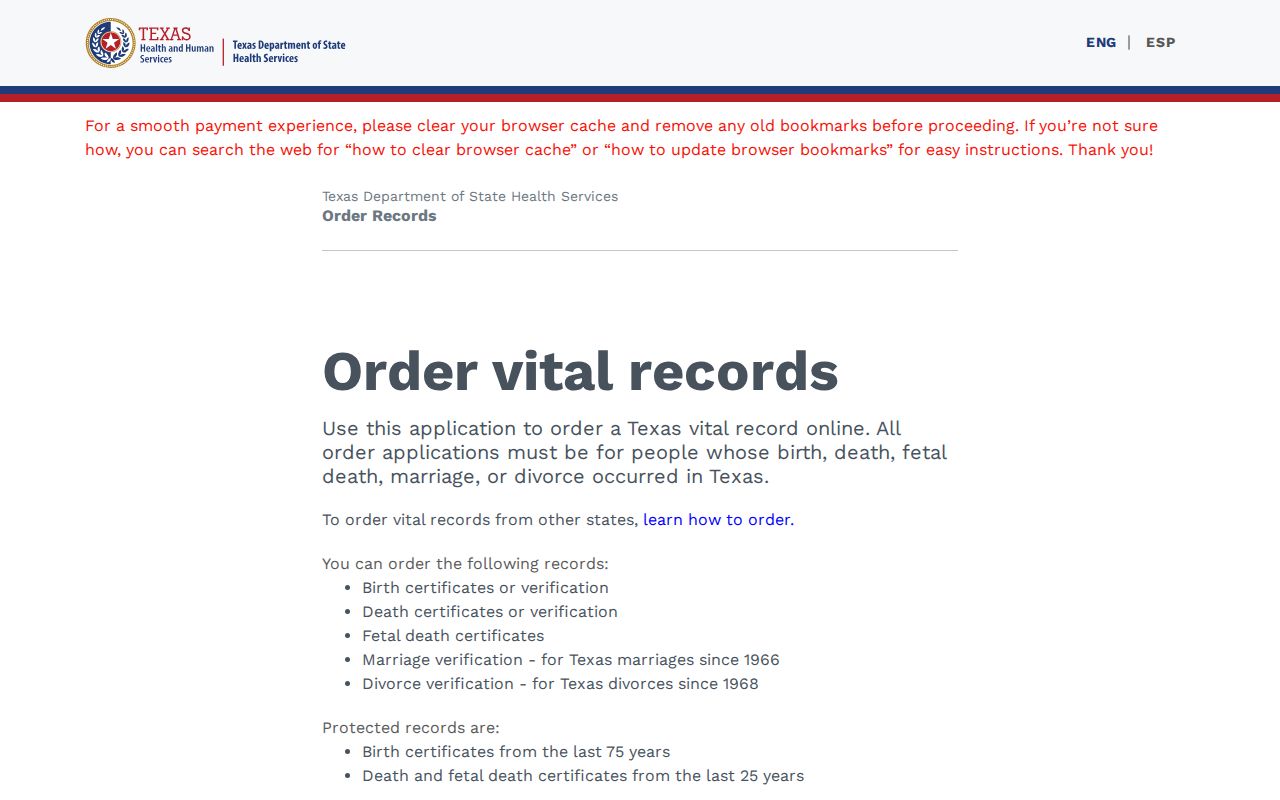
Use a state index for a historical lead, then request a certified copy only from the custodian and through the applicable eligibility route.
Prosper Public Requests When Portals Stop
When an online screen has no result, direct the request to the office that holds the underlying file. Prosper’s Public Information Request portal accepts a record description and requester contact information, with tracking and download functions. For Town material, identify the address, date range, record type, and any permit, case, or report number. A request for a specific record is stronger than asking an agency to perform an open-ended resident search.
The Texas Public Information Act, Government Code chapter 552, is the access framework. It requires a governmental body to promptly provide public information or, if it cannot do so within ten business days, state when it will be available. Exceptions, redactions, and eligibility rules still matter. Collin County accepts written open-records requests online or by mail, and clerk counters and public terminals remain important alternatives for older land and court material.
The Prosper request portal is the Town-level channel for a focused municipal-records request.
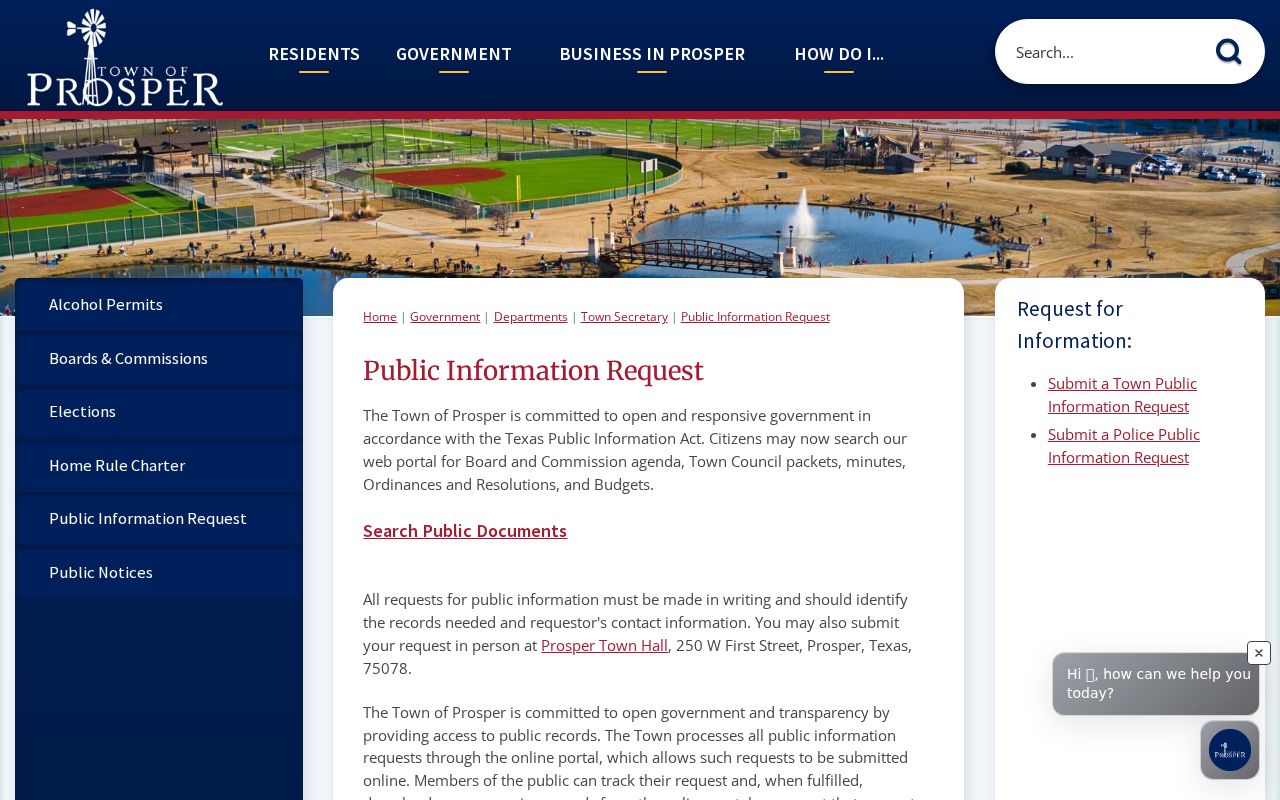
Describe the exact record and date range so the Town can route the request to the department that maintains it.
Note: Texas public-information access does not override sealed records, vital-record limits, or protected personal information.
Prosper Records With Privacy Boundaries
The public nature of a record does not make every personal detail available or every use appropriate. Texas has an Address Confidentiality Program for qualifying survivors, and protected voters can have address and identifying fields suppressed. County systems can redact protected identifiers from recorded documents. The Driver’s Privacy Protection Act restricts personal information from motor-vehicle records. Never try to reverse a substitute address or fill a gap with a motor-vehicle record.
Texas DPS explains the sex-offender registration program and its public-field exclusions. The registry is a statutory public-safety resource, not a social directory. Its public information excludes fields such as Social Security numbers, driver-license information, phones, online identifiers, and victim details. A current jail roster or state offender locator is likewise not a complete court history. Verify an individual case through the appropriate court record and its disposition.
The DPS program page describes public information and the exclusions that remain protected.
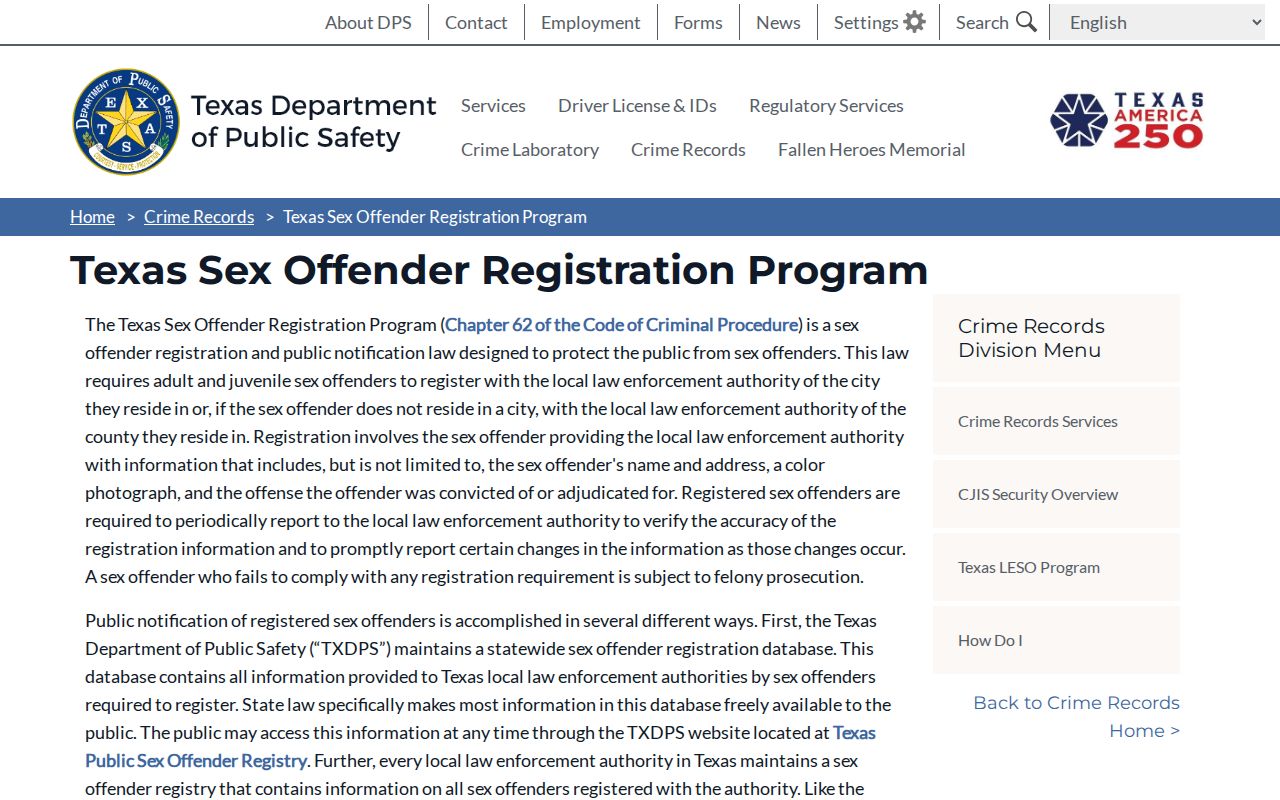
The official program materials reinforce why an index result must be read with its legal limits and source context.
Lawful use. Prosper records are for personal, lawful research. Using a public record to stalk, threaten, intimidate, or harass a person can violate Texas law.
Prosper’s Historic Names and Sources
Prosper’s historical vocabulary improves a family or house search. Official Town history identifies Walnut Grove, Rock Hill, and Richland, and explains that the railroad and post office helped consolidate the latter communities under the Prosper name in 1902. Search those names in county records, newspapers, census material, and cemetery research when a modern-place search comes up empty. The Prosper Historical Society, Collin County Historical Commission materials, and the library offer human-help routes, but the research did not identify a public historical-society catalog or a townwide cemetery database.
The Texas State Library catalog records an approximately 1940 Prosper map with streets, roads, railroads, water lines, and fire hydrants. The catalog view did not provide a downloadable image, so request access or reproduction instructions from the archive. UNT regional newspapers also carry Prosper News material; their OCR is helpful for discovery but needs to be checked against the scanned page before a fact is carried into a family timeline.
Historic Prosper Resident Directories
Prosper has no verified continuous municipal city-directory run in the research. The practical route is the Prosper Directory Book: search UNT’s multi-city collection by Prosper, Collin County, Denton County, surname, street, and nearby communities, then use the Texas State Library’s on-site directory shelf when the web collection misses a year. Regional Dallas pages from 1944-45 and 1955-57 show Prosper references, but they are not proof of a complete annual town list.
A historical directory is a dated snapshot. It can show a printed name, address, phone, occupation or household notation, subject to the volume’s abbreviations and OCR errors. Compare the scanned page with its text and then check a census, deed, obituary, probate file, or cemetery custodian before treating an entry as a firm household timeline.