
Prosper Previous Residents by Era
The previous residents of a Prosper address are best traced in layers. The appraisal record gives the present parcel and legal description. The county clerk index supplies recorded transfers. The historical land-search mode, archival directories, census material, permits, probate, and obituaries add dated clues. Each source has a different time span and purpose. A deed identifies a recorded ownership transfer, while a directory or census can show a household at a particular point. Neither should be stretched beyond what it actually documents.
| Source | Years It Covers | Where Held | What It Shows |
|---|---|---|---|
| Collin historical land search | 1843-1975 | Collin Official Records | Deed and land records as available |
| Collin current land index | Start year not stated | Collin Official Records | Recorded parties, dates, legal descriptions |
| Denton deed records | Official online start not verified | Denton County Clerk | Denton-side instruments and counter route |
| UNT directories | Regional samples, broader collection | Portal to Texas History | Historic address and household snapshots |
| Federal census | Released under 72-year rule | NARA and library sources | Household and place pairing |
| Town permits | Archive start not stated | EnerGov or Town request | Address-related filing and date evidence |
For a current-to-recent transfer, begin with the parcel and clerk index. For an older household, try the historical land mode, UNT, the library, TSLAC, newspapers, and census sources. The research did not verify a continuous Prosper-specific directory run, a public reverse-directory shelf, or a local house-history service. Treat those as documented gaps and ask the library or archive for the particular title, street, county, and year.
Prosper’s 1843-1975 Land Window
Collin’s Official Records Search has a Historical Records mode that reaches 1843 through 1975. It is a valuable bridge for a Collin-side Prosper address, especially when the current index has no stated beginning year. Search by party, document number, and legal description, not just the current street label. The recorded index can provide a party role, instrument type, dates, document number, book or page, and land description. A public index is still a finding aid, so use the clerk’s copy procedure when the document itself matters.
The Collin advanced-records screen shows the party, date, document, and lot/block/legal-description controls used to narrow a deed search.
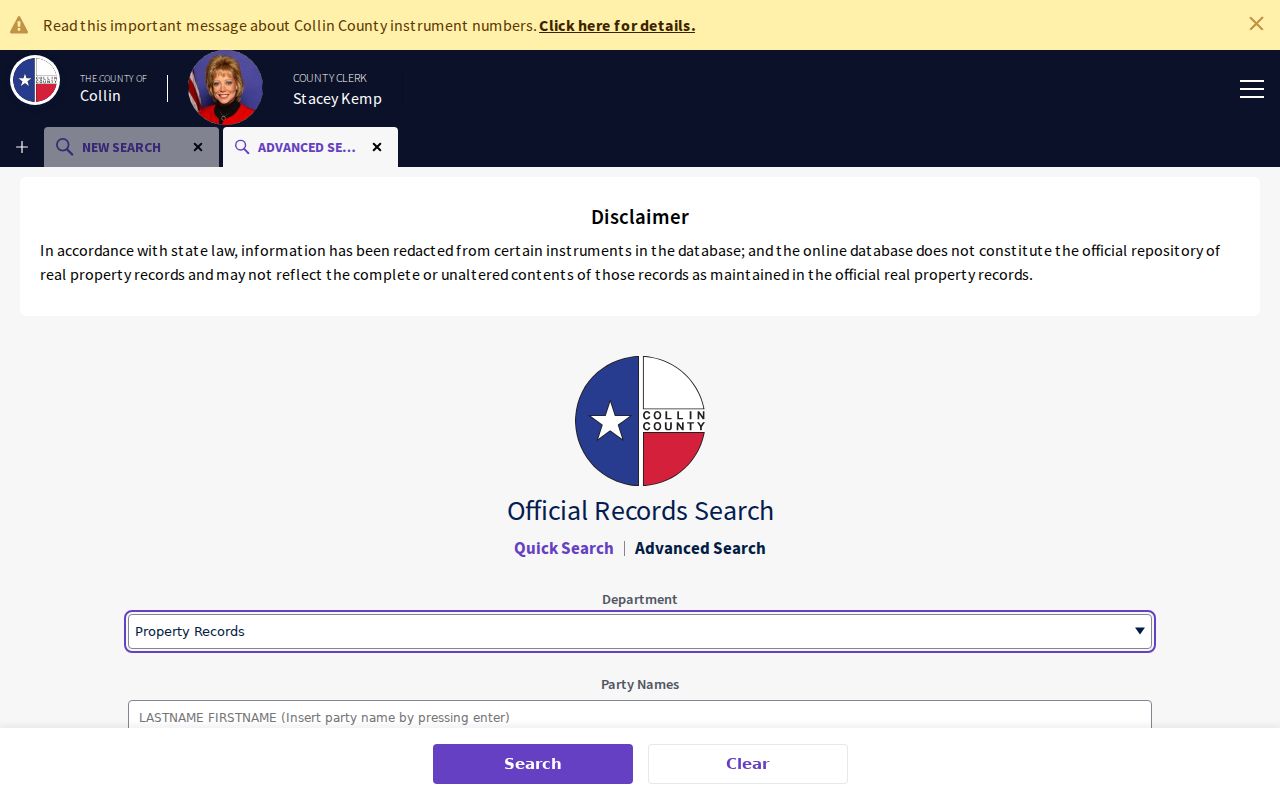
The fields make it possible to trace one parcel without turning a broad surname search into a false household history.
Prosper Previous Residents and House History
House-history help is distributed in Prosper. The Community Library says its policy includes genealogical materials and that rare Prosper or Texas publications may be preserved by the Prosper Historical Society or another appropriate institution. The historical society and Collin County Historical Commission material point to documents, photographs, newspaper clippings, family notebooks, Walnut Grove Cemetery care, and the Hays history volumes. The research did not identify an official Prosper house-history guide, a research fee schedule, or a public holdings catalog.
The Texas State Library city-directory guide is the on-site shelf fallback when an online index has no year or a town run is incomplete. Its print and microform directories are available in Austin, and staff do not ordinarily perform phone searches or email scans. Ask the library or archive with the street, lot or subdivision, county, approximate period, and a title or surname rather than an open-ended request.
The State Library guide describes the archive path for city directories and local-history questions.
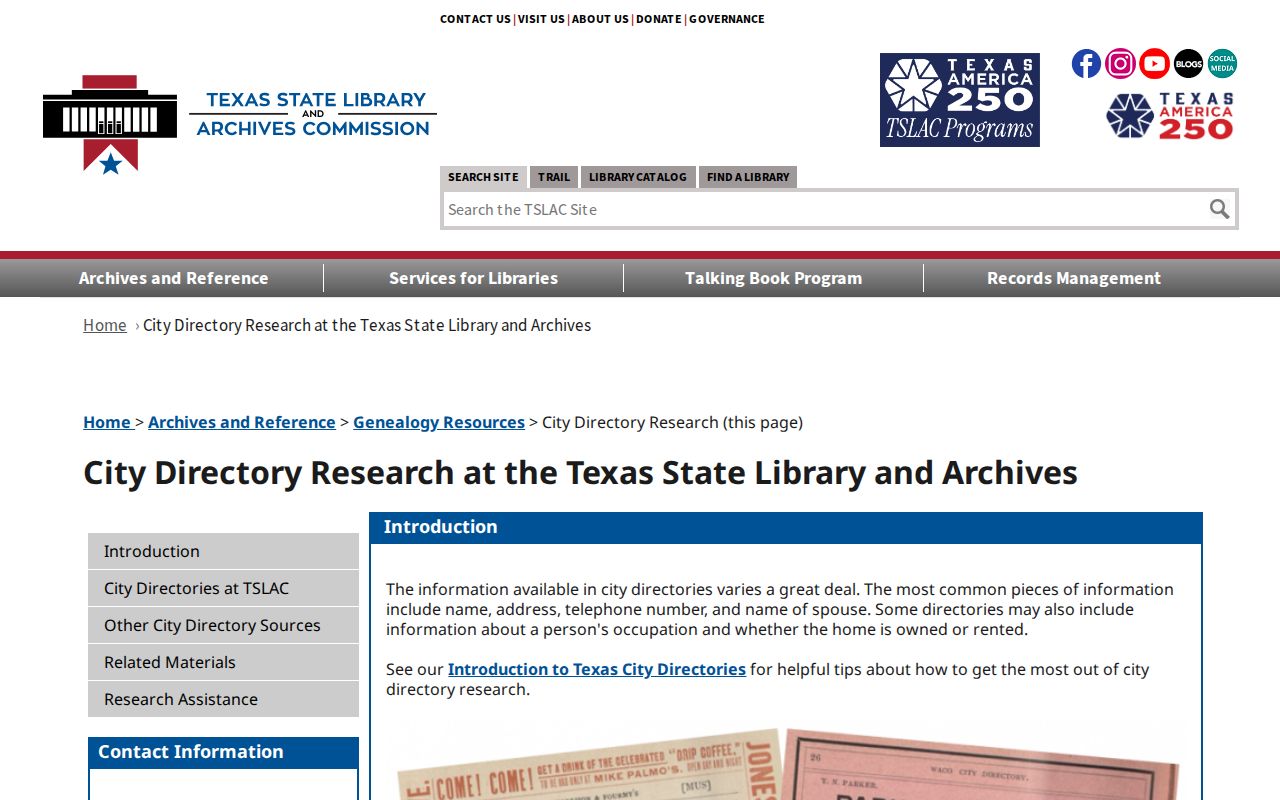
The guide supports a repository request when Prosper’s web sources do not establish a complete directory sequence.
Prosper Addresses Before Modern Names
When an address disappears from an old search, preserve the legal description and expand the place terms. Town history identifies Walnut Grove, Rock Hill, and Richland, with the railroad and post office helping consolidate the communities under the Prosper name in 1902. The Texas State Archives catalog also records an approximately 1940 Prosper map with streets, roads, railroad, water lines, and fire hydrants. It is a verified archive lead, but the catalog view did not provide a downloadable image.
No official source in the research documented a Prosper-wide street-renumbering year, a Sanborn map series, or a continuous municipal directory. Do not invent a renumbering or a map sheet. Use the current parcel description, plat, historic map record, county deed, and the printed place name to make the link transparent.
Prosper Previous Residents Deed Chain
Build the title trail from the parcel rather than the street name alone. The current CCAD or Denton CAD card supplies the situs address, parcel ID, owner, and legal description. Search the current owner as grantee in the county clerk index. Compare the deed’s lot, block, subdivision, tract, or abstract with the parcel card, then search the recorded grantor as a grantee for an earlier acquisition. Keep execution and recording dates separate because they can differ.
- Save the county, parcel ID, situs address, current owner, and legal description from the appraisal card.
- Search the current owner as grantee and compare the recorded document to the parcel description.
- Use the prior grantor as the next grantee and repeat the description check.
- Move into Collin Historical Records for the documented 1843-1975 mode when the period fits.
- When an online index stops, ask the relevant clerk about deed books, microfilm, public terminals, copies, or a manual index.
- Grantor and grantee
- The grantor transfers an interest; the grantee receives it in a recorded instrument.
- Chain of title
- A dated sequence of recorded transfers for the same parcel.
- Legal description
- The lot, block, subdivision, tract, or abstract wording that identifies land even if a street line changes.
- Criss-cross directory
- An address-oriented directory arrangement, if a repository has one, that can point from a street to a historic listing.
Prosper Past Residents Through Probate
An estate can interrupt a deed chain. If an owner record leads to a probate, divorce, foreclosure, lien, or estate transfer, search the appropriate court index for the case number and then request public documents from the clerk. Probate material can identify an executor, heirs, dates, and a legal description, although protected information can be withheld. Pair an obituary with the state death-index or certificate route and the probate file before carrying a family conclusion into the property timeline.
This probate-to-deed sequence is especially useful for an heir research question: named decedent, public probate docket, estate document where available, later recorded conveyance, and parcel description. It is not a shortcut around closed vital, sealed court, or protected address records.
Prosper Previous Residents Record Checks
Use the Collin deed index for the basic recorded-party route, and move to a clerk counter or request when the document or older index is not online. For a Denton-side parcel, start from Denton CAD and the Denton County Clerk. The county divide is part of the history, not a minor detail. A Collin name hit cannot establish a Denton chain.
The Collin official-records screen is the initial name, document, and historical-record access point.
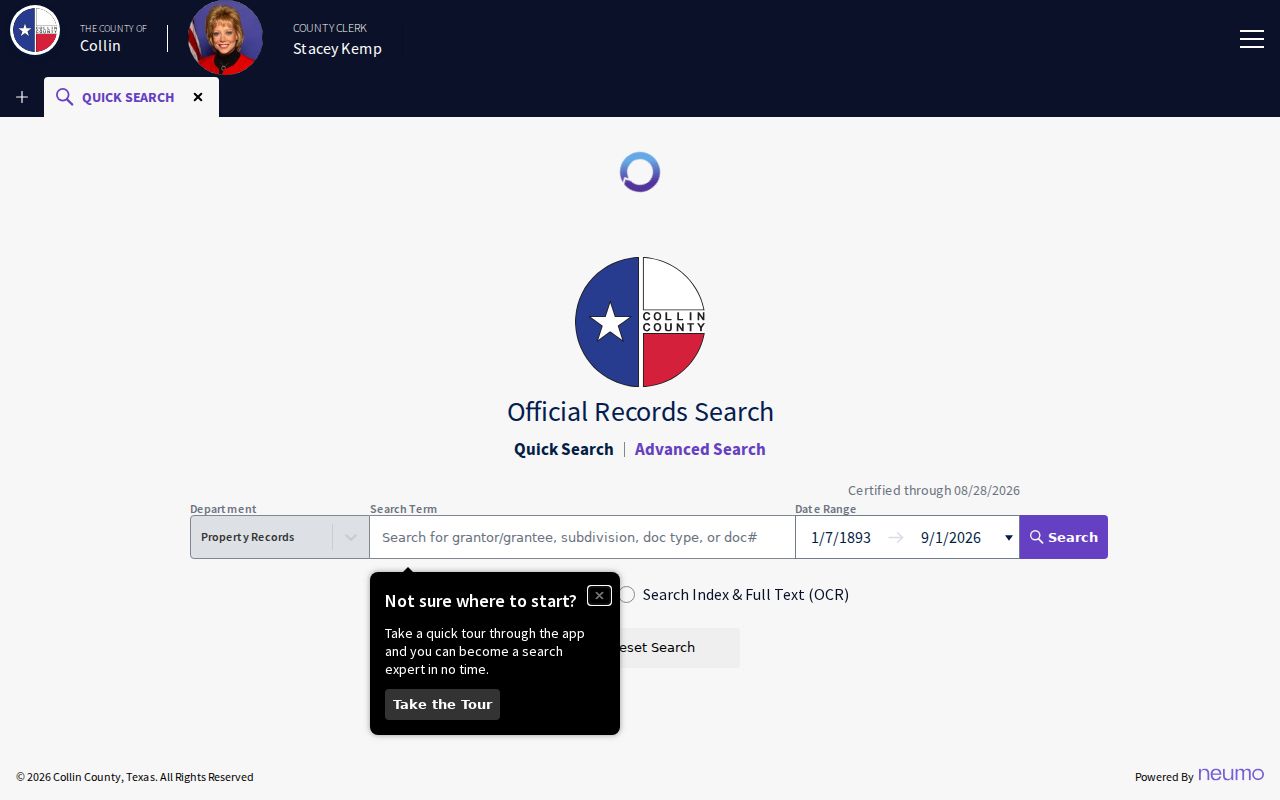
Document numbers and legal descriptions from this index make a later clerk request precise and reproducible.
Note: A deed shows a recorded property interest, while a directory or census entry supplies a separate dated household clue.
Prosper Previous Residents Household Trail
Owners are only part of a past-address history. The Prosper Directory Book describes the regional directory and archive routes for historical household work. Search the UNT collection with Prosper, Collin County, Denton County, historic community terms, a surname, and the printed street. A directory may list a name, address, phone, spouse or widow notation, and business line. It is a period snapshot, not current confirmation, and the OCR must be checked against the scanned page.
Pair a directory year with the nearest released federal census year. The census is household-oriented, while the directory is address-oriented. A newspaper funeral notice, obituary, probate docket, cemetery contact, or later deed can help explain a move, death, estate transfer, or a gap. Keep same-name candidates separate until at least two independent fields agree. No Prosper-wide official cemetery database or continuous directory run was found in the research.
Lawful use. Prosper previous-resident research is for family history, house history, and personal curiosity. Do not use a record to track, threaten, or harass a living person.
Prosper Previous Residents Date Notes
Make one worksheet row for each clue: source title, county, page or document number, name exactly as printed, role, date, address or legal description, and next action. A deed’s execution date can come before its recording date. A directory’s collection date can come before distribution. A census is a single enumeration date. Separating those dates prevents a timeline from showing an unproven continuous residence.
Cross-county checking matters at every stage. A property with a Prosper postal line may fall under a Denton custodian, while a nearby historical reference may point to Collin County. When a result conflicts, return to the parcel, legal description, date, and custodian. That method is slower than a name-only search, but it makes a past-resident conclusion traceable to the actual record.
If an old street cannot be matched, preserve the source citation and ask the Town or county GIS staff for the appropriate map, plat, boundary, or public-data route. A clearly documented gap is more useful than a guessed address match. The next search should follow the document identifier, not an assumption about where a household must have been.